|
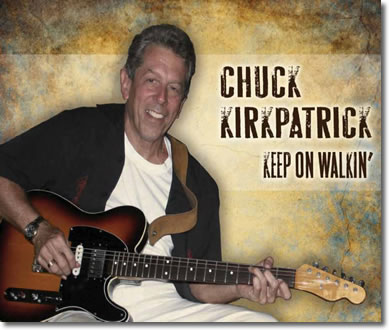
This South Florida native and well-known
musician, has just released his second album in 34 years entitled "Keep On
Walkin'" produced by his brother Scott. Both brothers have
a long history and extensive recording and performing credits
under their collective belt. Chuck may be best known for
his Beach Boys medley of 1982 that became Love 94's most-requested
record in the station's history. Chuck's career in music
began as a recording engineer with an 8 year stint at Criteria
Studios, followed by 5 years of touring and recording as a member
of the group "Firefall". Chuck has also been involved in
advertising and commercial production for the past 20 years,
voicing over 60,000 radio spots nationwide and producing hundreds
of jingles for the automotive industry.
Keep
On Walkin' is a collection of 15 original songs by Chuck,
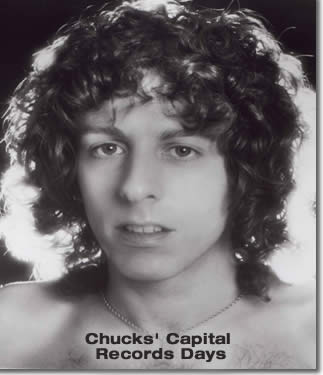
follows his Capitol Records album "Crane" released 34 years ago. Though not at
all intentional, there is a startling similarity between
the two albums. The sound that makes it "Chuck" remains
indelible….lots of guitars and harmonies.
Well, it was his dear mother who
got him started ...mainly by seeing some potential
in Chuck and being very supportive. She paid
for his guitar lessons and bought him his first guitar
and amp. A couple years later, she
bought him another amp, a brand new '63 Fender Concert
which now would be worth a fortune! Mom was actually
the first guitar player in the family. She and
her brother shared a love for music, and they would
exchange tapes of each other singing and playing their
favorite Polynesian and Caribbean songs.
The
brothers and Chuck would sometimes sing along with
Mom and harmonize....songs like "Jamaica Farewell" and "Brown-Skinned Girl". Mom had
a terrific record collection....all kinds of stuff from George
Symonette to Belafonte. When she wasn't playing her little
Martin 4 string baritone, Chuck would pick it up and mess with
it. Before long he was playing better than
she was. |
|
Chuck says "Playing guitar didn't really "click" for me
until I heard Chet Atkins. That was the messiah-of-sorts. Hearing
a guy who could play bass, rhythm, and lead all at once, all
by himself....well, that became my obsession. All I did
was listen to Chet records, trying to figure out how to play
that finger-style. I thought I had it right until I saw
him play on TV and realized I was doing it all wrong! Years
later I read a funny story about how Chet himself had wanted
to play like Earl Scruggs, and he learned it wrong too!
I started playing in a band with a fellow school-mate, Bobby
Naylor around 1959. It was me, Bobby, a third guitar player
- no bass - and a drummer. We practiced the entire summer
for one gig at the Beach Club that paid nothing. And we
had to rent a guitar amp because none of us owned one at the
time. Notice I said "amp" - ONE amp...for three guitar
players AND the one microphone!"
A couple years later, another band buddy, Paul St. Pierre and
Chuck went to see "Hard Day's Night". That was the epiphany. Suddenly
everything about being a musician and playing in a band changed
drastically. Every musician and every band wanted to
be or play was Beatles....it was crazy! Kids were getting
kicked out of school left and right for growing their hair
too long. Then came his "Beach Boys experience". He
went gung-ho from Beatles to Beach Boys and dragged the band
he was with at the time along with him. The suits gave
way to striped shirts, and now they were doing the entire catalogue
of surfing and car songs, totally unlike the other 200 bands
in town trying to be "mop-tops".
Then he became obsessed with The Association
and The 5th Dimension and more vocal harmony. The band
he was with then - Proctor Amusement Company - did a damn fine
job replicating those catalogues as well. All in all,
Chuck feels he is probably more of a vocal arranger and director
than a guitar player.
Chuck currently does not have his own band,
but he does play around town with the Rock And Roll Circus and
a couple other groups....just the club thing, playing covers
and classic rock. He
would really love to be able to go out and do some stuff from
the new CD, but playing originals in most clubs will get you
out of same pretty quick. And he feels the guys heI needs
to play his stuff accurately just aren't available right now. But,
if something happens and money magically appears, that could
change things.
As it is with most solo artists nowadays,
Chuck played nearly every instrument on the album...not by choice,
but by necessity. Everything
except for the earlier stuff done at Criteria, was recorded in
a 10 by 11 bedroom studio….not much room for any other
musicians! His brother recorded the drums in his studio
in California. You gotta love the technology that allows
this kind of networking, not to mention the luxury of digital
multi-track recording that would have cost $200 an hour to do
in a real studio.
process for songwriting
Chuck has an interesting
process for songwriting which he describes, "Let me begin by
saying that if I could be successful at anything in this business,
I would choose being a songwriter. I admire writers far
more than I do any players, singers, producers, or engineers. They
simply are the life-blood of the business we are in. Nothing
can touch people or bring forth such a range of emotions in anyone
like a great song can. Every significant event in a person's
life will be tied to a song in one way or another. Songwriting
is so many things...a gift most of all, a craft, for some an
obsession. I
would trade any talent I have to be a great songwriter.
|
When
I did the CRANE album for Capitol 33 years ago, it was
an agonizing process of writing. Every day my manager would shackle me to
the dining room table with pad and pencil in front of me
and tell me to write, when instead I wanted to be at the
beach or flying. Certainly I knew I had to come up
with enough tunes to complete an album - and I eventually
did - but that 'forced' method made me nuts. All
great songwriters will tell you that it takes discipline
and exercise. You have to write every single day
to stay sharp.
You'll write 20 shitty songs, but
number 21 will be the one that pays off the mortgage! I
happened to get very lucky with one of those songs that
magically flies into one's head and gets written in minutes. "Oh
Dancer" was written from a performing musicians point of
view - me of course - about a girl he sees on the dance
floor who's seductive dancing drives him crazy. He
wants to jump off the stage and join her, but he can't
because he's playing the song that keeps her dancing. I
had actually been playing the song live in clubs around
L.A. with GAME a year before I was signed and the crowd
reaction to it was always positive. Some nights we
had to play it two or three times in the same place! When
my manager began label shopping, we got quite a bit of
attention with "Oh Dancer", taking meetings with Warner
Brothers, A&M, even Clive Davis. Capitol offered
the best deal, allowing me to self-produce an entire solo
album with a budget of nearly $90,000. |
Chuck spends about 95%
of his time in his studio just creating music tracks of any
little riff or idea he may ave in his head, where he layers
guitar parts, keyboards, bass, and a drum track. There
are dozens of these damn things. But, they are just tracks
and won't become songs until he comes up with lyrics. The
title track "Keep On Walkin'" is based around a track that
he came up with almost 30 years ago! It was re-cut a
dozen different ways and finally arrived with a Mark Knopfler-like
feel about 3 years ago. But, it was still just a track. Then,
one evening about 6 months ago, he put on the cans, pushed "record",
and there it was! He didn't think it was all that great
at first. Chuck sent it to his Aussie buddy Paul Radcliffe
halfway around the world who loved it so much that he did all
the background vocals for it. The same thing happened
with "Man
Down". " I'd
had that track for over 20 years, re-cut it three times. Now,
this was one of those songs that really came as a result of
a definite "picture" I had in my mind. So clearly could
I see a guy, standing on the balcony of his city pad, drink
in his hand, watching the sun go down, and trying to plan his
evening. What
I did not realize while 'writing' the rest of the song is how
it would eventually become the story of a very tragic personal
experience. I won't get into that here, but the minute
details are written in the CD liner notes."
There was a "crossroads" of
sorts.
If Chuck could go back in time and do anything
differently in his career he would
have learned to read music better. Chuck says " Not
being able to read cost me a lot of session work back in the
mid 80's. There
was a "crossroads" of sorts, a point in my life where I made
a decision, choosing one of two paths before me. I was
at the height of my career as a recording engineer when I walked
away from it all to go to California with GAME. I'd been
awarded several gold records for my work with many major artists. Had
I remained in Miami, I would have wound up producing the Bee
Gees along with Karl Richardson and Albhy Galuten, my room-mates
and best friends at the time. But I chose to seek fame
and fortune in L.A. as a performer. I can't say it was
a bad decision because ultimately I did get my own record contract,
even if it was short lived. I don't know any other musician
in my circle of friends that got that far except George Terry
who had his own deal with Elektra.
Smiling
Chuck reflects, " At my age, you start thinking
more about the next five months. I mean…I'm
in perfectly good health and all, but the idea that I
still have any shot at a career in this biz never enters
my head. I just enjoy my couple of gigs a month
and puttering about in my studio in my spare time. I'm
looking forward to working on some more stuff now that "Keep
On Walkin'" is finished and released. When I was in my
late teens, early twenties, I, like so many other musicians
believed that the ultimate goal was getting signed to
a label. I wanted people to think I was already
signed, so I made a little cardboard replica of one famous
record company's logo and taped it in the back window
of my Volkswagon for all the world to see. And
what record company do you think that might have been? Yep…Capitol! Talk
about fate!
Getting signed by a major record
label and then getting dropped by a major label have
been the best and worst experiences in Chuck's career.
He says with a laugh, "I
am truly the luckiest musician of anyone I know. The
stuff that's been laid upon my table…..well, so much
of it went unappreciated because of my youth and misguided
ambitions. I spent countless hours at the feet of the
masters - Tom Dowd, Jerry Wexler, Arif Mardin - watching
them work while I turned the knobs for Aretha Franklin, James
Brown, Eric Clapton, dozens of other major artists. Then
I got to sing and play guitar for Eddie Money, the Bee Gees,
Peter Frampton, Meatloaf, America, Brian Wilson….good
God, how did I get so lucky? Now, I saw my share of
shit in the business….had to deal with some real arseholes. One
thing I have learned and that is, the most truly talented
people are always the nicest. They are not insecure
and don't project any insecurity on those around them. It
was the half-wits and no-talents that drove me nuts…made
my life miserable in the studio and on stage. Guys
like Barry Gibb, Eric Clapton, and Peter Frampton were
a joy to be around and to work with |
. |
Believe it or not
During Chuck's career
he actually got to play with some of his heros that many of us
would dream of doing. To this day, he still pinches himself when
he thinks of the two recording sessions he actually played on
with his idol, and mentor, Brian Wilson! When he was signed
to Capitol, he was living in Santa Monica, just 8 blocks from
Brother Studios. So where did he choose to record? One
night, Dennis Wilson walked into a session and before long, they
were out in the studio jamming and getting hammered together! Then
one day he got the call from the receptionist at Brother…."Brian
is coming to record and we need a guitar player". "Oh
my God……and there I was, standing next to The Man
while he played piano, showing me what he wanted me to play on
guitar. And there in the studio with me was Billy Hinsche
on guitar, James Guercio on bass, and Dennis on drums!" So
where can he possibly go from there? What in this lifetime
will ever top that, except singing on stage with the Beach Boys? Well,
six years later he did just that, even if it was for three songs
at the end of one show in Saratoga Springs.
Chuck loves the joy of
doing it purely for art's sake with no pressure, deadlines,
or commitments. For years he was 'tainted' by the whole
record business thing….having to "be commercial", being "hip",
having the "clout". That mindset caused him to have
some severe writer's block. He kept thinking everything
he was writing or recording wasn't good enough. He kept
trying to measure up in his own mind to what he thought was
some kind of standard, and for years, didn't write or record
a single thing. Now, he records stuff for the pure joy
of hearing it back, just like an artist paints pictures. Art
is something a true artist has to do, like breathing.
It would be nice for artists to have better
business sense and understand the economics side of things. Artists
who got into the business for money should have been business
men instead. And
there are quite a few we all know who have done just that. The
business people need to be a little less greedy and a little
more understanding of artistic temperament, and cognizant
of the fact that artists spend years honing their skills
before they make a penny at their craft What
the heck is a guy 66 doing up on stage with a rock band? But
then think of his idol "Keef" who is what, 67 now? He
is rock and roll! As
far as what to expect for the future,a lot of that depends
on the success of this current release. No
matter what, Chuck will always be in his little studio until
all hours of the night, just messing around. With
dozens more tracks that all need lyrics and he will eventually
get them. We'll
just wait & see....
|