|

Each month we will be featuring different
drummers and styles of music, letting them speak their mind on all aspects
of drumming, equipment, what they love about the drums, philosophies and their
reflections on music from the drummers unique perspective.
Please contact us if you would like to share your thoughts at info@MetroMusicMayhem.com.
Being a drummer is more than just a hobby; it is a lifestyle – one
that takes a lot of commitment and diligence to succeed at. The payout; however,
is immense. Being a drummer can be one of the most fulfilling things someone
can do in their life. But how do you get to that level of musicianship? There
is definitely a difference between a drummer who plays for a hobby, and a drummer
who plays for a lifestyle. The big difference is attitude and practice habits.
Having the self control and commitment to practice regularly is the only way
you will improve as a drummer. There are a few tips that I have developed over
the years of drumming that will help any drummer out immensely; tips that will
speed up your learning curve and make practicing the drums a fun experience
and not a chore. So read on to learn a few common practice tips developed to
enhance your drumming.
Make Time to Practice and Time to Play
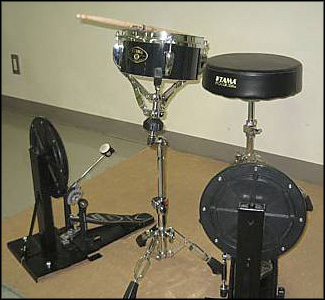 One
of the biggest errors a drummer can make is failing to make time for practice
as well as time to jam. Believe it or not, there is a big difference here.
Practice time is a chance to work on your stick control, drumming beats, skills,
and other techniques that you may want to learn. Jam time is a chance to apply
your newly learned skills to real applications. Most drummers allot a time
to “practice / jam” and end up just playing to a few of their favorite
bands. Now this is not a bad thing; however you never really get that focused
practice time alone. So, my first tip is to schedule a time in your week to
practice, and a time to jam. This way you can sit down and focus on developing
your independence, speed, and control of your feet and sticks without getting
distracted. For some great ideas on practicing the drums, check out the play-along
section of FreeDrumLessons.com; there you will find tons of songs that you
can download and take to your kit! One
of the biggest errors a drummer can make is failing to make time for practice
as well as time to jam. Believe it or not, there is a big difference here.
Practice time is a chance to work on your stick control, drumming beats, skills,
and other techniques that you may want to learn. Jam time is a chance to apply
your newly learned skills to real applications. Most drummers allot a time
to “practice / jam” and end up just playing to a few of their favorite
bands. Now this is not a bad thing; however you never really get that focused
practice time alone. So, my first tip is to schedule a time in your week to
practice, and a time to jam. This way you can sit down and focus on developing
your independence, speed, and control of your feet and sticks without getting
distracted. For some great ideas on practicing the drums, check out the play-along
section of FreeDrumLessons.com; there you will find tons of songs that you
can download and take to your kit!
Use a Practice Pad
This is an obvious tip for drum practicing; however it goes
a little deeper than that. When you practice, you should spend half of your
time practicing on the full drum set. And the other half of the time on a practice
pad. This is something that most drummers know to do, but rarely do it. The
benefit to using a practice pad is you are forced to develop your stick control.
When you play on a full drum set, you have a lot of distractions in front of
you, making it easy to play around the kit instead of focusing on one technique.
A pair of sticks, a metronome, and a practice pad is all you need to improve
your speed, control and creativity on the drums. Not sure what to practice
on a practice pad?
Use a Pillow for a Practice Pad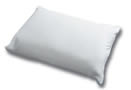
Following the practice pad tip is a small little tip that most drummers do
not know about – using a pillow for a practice pad. Most drummers would
never do this because there is little to no bounce from a pillow, it practically
absorbs your full stroke; very inefficient. This is the whole point of using
a pillow though, to force yourself to work that much more. When you get no
bounce from the pad or drum, you are forced to use your wrists to bring the
sticks back up. This really works your wrists out. Try playing a double stroke
roll on a pillow, not as easy as you think!
Practice with a Metronome
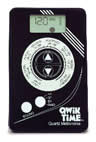 This
is another one of those obvious tips for practicing; however I cannot stress
it enough! Practicing without a metronome can actually hinder your drumming,
as you may learn how to play a drum fill or solo off time! We are drummers;
our duty is to keep the band on time. If we cannot even play a solid drum beat
or roll on time, then how are we supposed to lead a band? There are ways to
add some creativity to this tip though, and that is by playing to your favorite
band tracks. Most tunes recorded professionally are on time, so you can always
play along to them instead of a click track. This way practice is a little
less boring, being able to listen to your favorite songs while you practice.
Just make sure you do not break tip number one and get distracted by the song! This
is another one of those obvious tips for practicing; however I cannot stress
it enough! Practicing without a metronome can actually hinder your drumming,
as you may learn how to play a drum fill or solo off time! We are drummers;
our duty is to keep the band on time. If we cannot even play a solid drum beat
or roll on time, then how are we supposed to lead a band? There are ways to
add some creativity to this tip though, and that is by playing to your favorite
band tracks. Most tunes recorded professionally are on time, so you can always
play along to them instead of a click track. This way practice is a little
less boring, being able to listen to your favorite songs while you practice.
Just make sure you do not break tip number one and get distracted by the song!
Set a Goal for Each Practice Session
One tip most drummers fail to do is set goals for their practice sessions.
This does not have to be an unreasonable goal, just a very basic reachable
goal. Make it challenging and sensible at the same time. The reason for this
is you are more focused on the time you are practicing. If you go into a practice
session with no goals, then you will have no drive to learn anything! A very
common goal I like to set is tempos in which I play my essential drum rudiments
at. For example, I may set a goal to play a double stroke roll at 180 bpm one
session, and 185 bpm the next. So as you can see, this is just to give yourself
some guidelines for your time spent practicing.
Surround Yourself in Challenging Music
A really important tip I will share is to surround yourself
in challenging music and drumming. If you want to learn how to play the double
bass drum, then surround yourself in music that incorporates the double
bass drum. The same goes for all styles of music; you will not learn jazz by
listening to rock. When you are
constantly listening to advanced beats and odd time signatures, you are sub-consciously
implementing it into your brain. You will be challenged much more, and have
a much greater creative edge this way. So try and find some music that challenges
you a little.
Have Fun No Matter What
The last tip is another given – have fun no matter
what you are playing. This means even if you are practicing boring rudiments,
try and find a way to make it fun. If you are not having fun when you are
playing, then you will not learn nearly as much. So play what you want to
play, and practice what you want to practice! Drumming is supposed to be
a way to express yourself in a good and positive way, so make sure you are
having fun!
These tips are more like guidelines that every drummer should
take into consideration when practicing. You will notice when you start following
these guidelines, you will get much more out of your practice sessions!
|