|

By
Chuck Kirkpatrick
I wish I had kept a logbook or diary of every session I ever
did. It would have been fun now to go back and read and reflect
on what was a great career for me while it lasted. I feel so
crappy when people come up to me now and say, "remember
that session you did with my band.....". And I don't. There's
just been too many years gone by and too many brain cells gone
now. But worst of all is is that for far too long, my heart really
wasn't in it. Recording engineering had become a job while my
dream was to be a rock star. Things worked out as they always
do....
There were however, moments in my career at Criteria Studios
(now Hit Factory South) that are burned forever in my brain which
I will share........in no particular order or time-line; some
good...some not so good. The not-so-goods are either relative
to very difficult clients, or to my royally fucking up something.
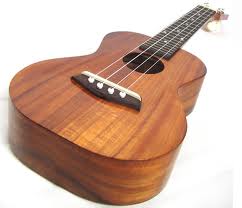
GODFREY'S UKELE
Arthur spent a great deal of time in Miami
back in the 50's - 60's. He was I believe, the owner of
the Kenilworth Hotel on Miami Beach. I remember a session
he came in to do with a full orchestra, with Mack Emerman
engineering and me assisting. Everything was set up in
studio A, the musicians were seated and ready with charts
on stands, and in walks Arthur. As he makes his way towards
the vocal booth, he stumbles and drops his prized ukelele
on the polished concrete floor. The neck breaks off the
body with a sickening sound, followed by dead silence for
about 10 seconds while Arthur bends over to pick up what
is left. We were all frozen in fear of what might come
next. Would Arthur break down and cry, or going into a
screaming profanity-laced rage? He held up the pieces,
looked at them for a moment, then made some joke that cracked
everybody up and broke the ice. The session went on successfully
that day with Arthur just singing. |
 |
FAMILY FEUD
There were a few of these, but this one
sticks out. A very well known local producer who at the time
happened to be married to a very well known local singer was
doing a jingle session with a very well known brother of a
producer/engineering team. I was assisting the session and
also out in the studio doing vocals with the producer's wife.
It wasn't long before the trouble started with producer telling
wife that she was a little flat on one note. "No I am NOT", says she. Engineer chimes in, "Yes
you WERE". After about three minutes of this, producer's
wife slams her fist down on the piano lid and then walks out
of the studio. Producer gathers up charts, and HE walks out of
the studio (hate to imagine the dinner conversation at home that
evening), followed by engineer who walks out of control room
leaving just me and the client! Needless to say, the session
was scrapped.
The other incident could have been a bit more serious. A Bahamian
group were in studio B doing a session with same local producer
and me engineering. I could see some obvious tension even when
these folks walked in - a man and a woman having either some
creative differences or personal problems. I couldn't understand
a word either of them said. They finally got around to actually
playing and singing, but not for long before the bickering and
yelling started. You could see by the look on the producer's
face that he was wishing he'd never taken this gig. The last
thing I remember seeing was the woman picking up one of those
metal canister-type floor-standing ash trays, raising it over
her head and lunging at the man. I believe the producer grabbed
the ash-tray before she was able to throw it. That was when I
left the control room.
ZAPPA
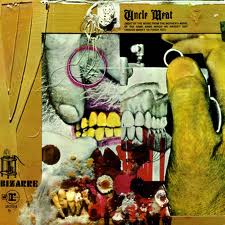 |
I was assistant
engineer on the "Uncle
Meat" album sessions at Criteria. Frank had brought
his own long-time engineer. The band had just finished
an awesome 10 minute long jam and the tape was about to
run out. The engineer removed the full take up reel with
the recorded performance on it and set it atop the tape
machine. Somehow we all got distracted. Another reel of
what we thought was blank tape was loaded on to the machine
for the next tune. An hour or so went by before Frank asked
to hear the previous jam.
The engineer reached for the
tape only to realize he'd loaded that reel to the supply
side of the machine thinking it was a new piece of fresh
blank tape. I suppose it was partially my fault for not
managing the tapes better, but the damage was done. We'd
mistakenly recorded over the 10 minute jam and our fears
were realized when we hit "play" and heard what
was left of the jam playing backwards. Now to break the
news to Frank, who had stepped out of the control room
for a moment. I expected the worst....the screaming...possibly
even bad physical things happening...breakage of gear or
my bones. I trembled in fear as his engineer said, "Frank,
most of it got erased". Frank stood there and as calm
as could be and quietly said, "Well....lets' just
go out there and do it again...." |
JERRY WEXLER ("You WHAT?")
This may have been my worst moment in history.
Now, it's one thing to get yelled at in front of a bunch of
people for screwing up. But when one of the most famous record
producers in history lowers his head, leans towards you looking
over the tops of his glasses, and says in a voice barely above
a whisper, "You
WHAT?" It was on the Delaney and Bonnie "blue album" session
with Tom Dowd and Jerry Wexler producing. We were overdubbing
a brass quartet on a song called "Free The People".
Back then we had only 8 tracks, and you had to get very creative
with overdubs. The main body of the song was finished but Jerry
wanted to have a salvation army brass band intro. This meant
punching in on the front of the song on some of the master tape's
tracks, and punching out at precisely the right moment so as
not to erase anything else. I thought I had the right punch-out
point after a few dry runs, but during the actual recording,
I missed it by a bar or two, erasing over the original instruments.
In a sickening few seconds, I realized what I had done. Then
Jerry asks for the playback. When I told him what had happened....well,
needless to say, I nearly pissed myself with fear. I still have
flash-backs......"You WHAT?"
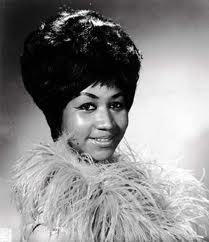
THE ARETHA SESSIONS
If I could relive any 30 minutes of my
entire career as an engineer, it would be on one of the
Aretha Franklin sessions. I know many will scratch their
heads in disbelief thinking it would be the "Layla" sessions.
But what sets these sessions apart from any others was
the combination of a ridiculous amount of talent (all in
the room playing and singing at the same time), the most
powerful trio of producers on the planet; Jerry Wexler,
Tom Dowd, and Arif Mardin, and great SONGS. The energy
was ridiculous. Nothing in my experience behind the board
will ever top that. When you see and hear 9 or 10 of the
best musicians in the business all 'cooking' behind one
of the greatest singers in history doing it live in the
room (and with 3 backup singers too)....well, I still get
the chills thinking about it. And it got me one of the
few gold records I was ever awarded for "Don't Play
That Song". |
 |
MY ONE BRILLIANT DESIGN IDEA
It wasn't long after Criteria took delivery
of a brand new console custom built by Jeep Harned that we
moved up from 4 track to 8 track recording. Unfortunately,
the console had been designed over a year prior to it's completion
and delivery, and its design was now obsolete. It would only
provide 4 main output channels or "busses" of output to a 4 track machine. Each of
16 input channels had a 4-pushbutton select switch panel that
allowed you to route the signal to any one of four tracks on
the tape machine. What was needed now was an 8 button panel to
allow selection of 8 tape tracks, and retro-fitting the console
for that would have cost thousands of dollars and a hundred hours
of down-time. On the existing 4 button panel, there was a 5th
button marked "pan" which would allow two tracks to
be chosen and have panning between them for a stereo effect.
During the design this button seemed like a good idea, but it
proved to be useless in our every day application. As Mack Emerman
stared at his new and now-obsolete console, wondering what to
do, that magic light-bulb went off in my brain. "Mack,
what if we use that 'pan' button to make the busses 1 through
4 all switch over from 5 to 8?" "Oh my God!",
he exclaimed....."That's it. That's brilliant!" And
after several evenings of wiring well into the wee hours of the
night, we had an 8 track console.
ABBEY ROAD
Strangely enough, one of the last sessions
I did as a Criteria employee was at Abbey Road in London. Producer
Russ Ballard had been asked by Capitol Records to step in and
help the group "America" revive
their sagging sales with some fresh material and approach. Ballard
had a major track record and could pretty much call the shots
for his services. He insisted on working in England where he
lived, but he demanded an American recording engineer. Somehow
the call came through to Criteria, and I was the first one asked
if I wanted to go. I was a bit hesitant at first. There were
some steady local gigs that I would have to dump for the three
weeks I'd be away. And there was an impending audition for the
group "Firefall". My better judgement prevailed, and
across the pond I went. I was to work 6 days a week in Abbey
Studio 2 (you all know the history of THAT room!) and stay with
some friends of Ballard's out in Hoddeston-Hertz. At first, I
was a little concerned about not having my own hotel room and
privacy, but my stay with the Andersons was a wonderful and cultural
experience. Tony and Carol were a young couple with two adorable
daughters ages 5 and 7. I got to experience the life-style of
a typical English family, and they could not have been more hospitable.
Carol fixed dinner for me every night, and we would all watch
either BBC 1 or BBC 2 on the "telly" until bedtime.
I commuted daily with Ballard in his Rolls Royce to St. John's
Wood, about a 45 minute drive each way. It's pretty hard to put
into words the experience of going to EMI / Abbey Road Studios.
We were met at the iron gates by the same gatekeeper who had
been there for over 20 years. Studio 2's control room as you've
all seen from the pictures is upstairs.
The studio itself is quite large with very high
ceilings. You have to go down a stairway to get from control
room to studio. The first thing I noticed out in the studio were
these industrial flourescent light fixtures mounted vertically
on roll-around stands. The light-tubes in the fixtures were red
- something I'd never seen before - instead of the usual white.
I asked my assistant Danny about those. The Beatles had requested
mood lighting for their sessions instead of the overhead industrial
white flourescents that normally lit the studio, and that's what
EMI gave them.
 |
The tape machine
was a gigantic Studer MK-80 24 track. The console was an
EMI in-house design with Painton faders and the buss select
switches were rotary - very strange! Most unusual was the
patch bay. The cable connectors were unlike any I'd ever
seen.....huge, clunky things the size of a cigarette pack.
My assistant Danny was a very sharp young kid of 20 who
helped me out a lot. I didn't even have to touch the tape
machine or the transport controls. Danny was the "tape-op". The sessions began with
Russ Ballard recording the tracks by himself, playing guitars,
bass, keyboards, and programming the Lynn drum machine.
After the first week and a half, Dewey Bunnell and Gerry
Beckley came in to do vocals on the three songs. During
the recording of the vocals for "You Can Do Magic",
Russ asked me to go out and sing a high part on the chorus.
He'd done most of the backrounds himself
and wanted a slightly different vocal texture. So, next
time you hear that song on the radio, listen for me singing
the high part in "You know darn well when you cast
your spell.....you will hypnotize......". That's me....and
I'm still getting performance-rights checks for that!!
One thing I really enjoyed working at Abbey was Tea Time.
You've all heard the expression, and believe me, the Brits
take it very seriously. At 4 pm sharp, EVERYTHING comes
to a halt - even in the middle of a take - and everyone
heads for the restaurant downstairs. I would usually have
a 'pint' instead of the usual tea. What's consumed doesn't
matter. It's the simple ritual of the entire nation taking
a collective afternoon break. |
After about 30 minutes, everyone heads back to work. I remember
seeing in one of Abbey's hallways, a large, one inch tape machine.
It appeared to have only four channels / tracks. Then I realized
that it was one of the older machines that had been used by the
Beatles! We never had any 1" four-track machines in the
U.S. One microphone I was introduced to there was the infamous "hamburger" mic,
so named for its shape, the Coles 4038. We used those on grand
piano. Vocals were done with either a U-67 or U-87. One of the
high points of my time at Abbey was the day Danny and I got to
hear some unreleased Beatles outtakes. We were walking down a
hallway when we heard this unmistakeable sound coming from behind
a closed control room door. Danny quietly opened the door. Then
engineer turned around and when he saw me he immediately stopped
the tape. "It's okay, he's working here", said Danny.
We stayed for a few moments and got to hear the Beatles running
down one of their well-known songs in a different key and talking
between takes. Biggest bummer of the trip was me catching pneumonia
after running around in the freezing rain on my day off. In closing,
I have to say that standing in that studio where the course of
pop music history was changed forever, was truly the highlight
of my entire career.
AND NOW A GOODBYE
I'm sad to say that this will be my last
column of "Engineer's
Corner" for Metro Music Mayhem. A combination of the fact
that I have pretty much exhausted my knowledge base which I have
shared with you, and my serious lack of education where the newer
technology is concerned is my reason for saying goodbye. I do
hope someone - perhaps younger and with a brighter vision of
the future of the industry - will pick up the reigns here and
'further the cause'. I want to thank David Jacobs for giving
me this opportunity. It's been a great experience for me, digging
back through the memories and reminiscing....even better being
able to share them with you all. Happy recording!!
Chuck Kirkpatrick
Chuck Kirkpatrick
has worked on numerous million selling and legendary
recordings. While working as a house engineer at the
now legendary Criteria Studios in Florida Chuck's
impressive ‘60s and early ‘70s, historic engineering
feats included a number of well-known
rock artists. Chuck
currently performs with the group "Rock
And Roll Circus" and can be reached at ckirkp1021@aol.com.
|
|